


In the recent Court of Appeal decision Nigro v. Luciano, the Court of Appeal found that a dog walker who was attacked by a dog under her control at the time of the attack was statute barred from bringing an action for damages against the dog’s owners.
The Court held that the dog walker was in sole possession and control at the time of the incident. She was therefore an “owner” within the meaning of the Dog Owners’ Liability Act (“DOLA”), and jointly and severally liable with the dog’s owners for the attack. As such, the Court found that she was precluded from pursuing her claim for damages under the DOLA.
The Court noted that the inquiry of whether a person is an “owner” under the DOLA is fact specific. However, in this case it found that the circumstances of the attack fit the definition of “owner” under the Act.
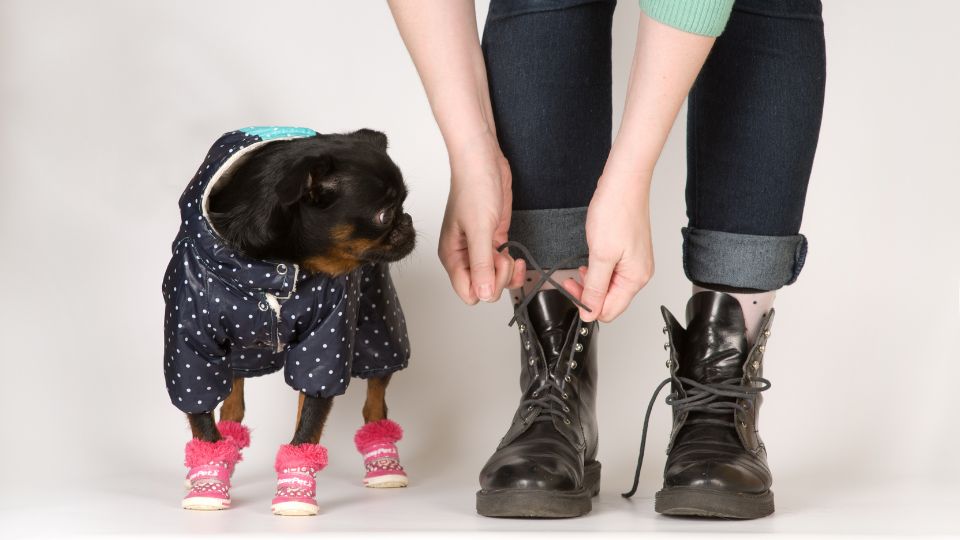
In Nigro v. Luciano, the owners hired the dog walker to care for their two dogs three times a week. They gave her a key to their house. She had previously cared for their dogs, including one named “Forrest Gump” (a five year old Boxer). Forrest had a prior foot infection such that his veterinarian recommended that Forrest wear rubber boots in wet or muddy conditions, to protect against infection. One of the owners instructed the dog walker to put boots on Forrest if there was snow. On the day in question, the dog walker was alone in the owners’ home. There was snow and mud outside. She moved toward Forrest to put the boots on for his walk. He jumped and bit her arm. She sustained injuries to her abdomen, left upper thigh and both arms. She brought an action against the owners for $1 million in damages claiming that the owners were strictly liable for the attack.
The owners brought a summary judgment motion against the dog walker, and were successful. Justice Christie hearing the motion noted that an “owner”, as defined by s. 1(1) of the DOLA, includes a person who “possesses and harbours” the dog. The motion judge’s ruling relied on the Court of Appeal decision in Wilk v. Arbour, which held that “a person who is in physical possession and control over a dog just before it bites or attacks another person or animal” qualifies as “possession” of a dog and is therefore an “owner” under the Act.
In this case, the Court of Appeal found the motion judge correctly interpreted the DOLA. It dismissed the appellant’s argument that the owners were responsible for the attack because it occurred on the owners’ premises. The Court of Appeal found this argument irrelevant to the question of liability. Nor did the Court accept the appellant’s argument that she was merely carrying out the instructions of the owners. Rather, it found that the facts relevant to “possession” were clearly established and that “There is no requirement that the possessor be the only owner, or that the possessor be acting exclusively on her own volition”. The dog walker had previously cared for Forrest. She was also alone in the home and had sole care of Forrest at the time of the incident. She was in the best position to decide when and how the owners’ instructions should be carried out. As such, the Court found that she was in a position to control the dog’s behavior at the material time.
The Court’s decision reinforces the legislative purposes of DOLA, by holding accountable those persons in control of a dog who are best positioned to take action to prevent such bites or attacks. The focus of the liability inquiry is on the person in possession of the dog at the relevant time, not the person in control of the premises. This is effected by s. 3(1) of DOLA, which excludes applicability of the Occupiers’ Liability Act where a dog bite or attack occurs on the owner’s premises.
Jonathan White is a lawyer at the firm and the author of this blog. If you have a question about this decision or a similar file, please contact Jonathan at [email protected].